
The product operating model health check reveals five emerging patterns
We've all heard the call to move from outputs to outcomes, align teams around strategy, tie product work to customer impact.
The product operating model proposes a strategic framework to do this and has surged in popularity, frequently discussed at meetups, online and in notable books. The reality is that many organisations struggle to reach the nirvana the Product Operating Model promises.
To explore how organisations perceive their product operating model maturity, we launched a health check. It’s a series of questions built around proven product principles that help assess how your organisation operates. Upon completion, participants receive practical, data-driven recommendations to help teams ship value faster and build stronger product habits. All of the recommendations come from our collective experience of building products.
In this article we share the patterns that are beginning to emerge. If you recognise some of the same patterns in your organisation, you’ll find related articles we’ve included that can help you course correct.
We asked participants to score themselves on leadership, team structure, discovery, delivery, and impact measurement. None of the responses scored perfectly across the board. But what's interesting is where the same strengths and weaknesses keep appearing.
Here are the five emerging patterns that stood out:
- Low confidence in product strategy
- Low confidence in domain boundaries and ownership
- Respondents express greater confidence in delivery than discovery
- Confidence in delivery practices is higher than delivery metrics
- Connecting product work to business outcomes remains a big challenge
A note on the data.
These findings are based on responses from 68 practitioners who completed Hyperact's Product Operating Model Health Check. Participants self-selected into the assessment, so the results should be interpreted as emerging patterns rather than representative of all organisations.
The responses indicate participants' level of confidence rather than an objective measure of organisational performance. As with any survey using a rating scale, small differences between average scores should be interpreted with caution. We've therefore focused on the broader patterns that emerged across the responses.
These findings represent the first cut of the data. If you haven't completed the product operating model health check yet, you can do so here. As more organisations take part, we'll revisit the results and publish updated analysis in part two.
1. Low confidence in product strategy
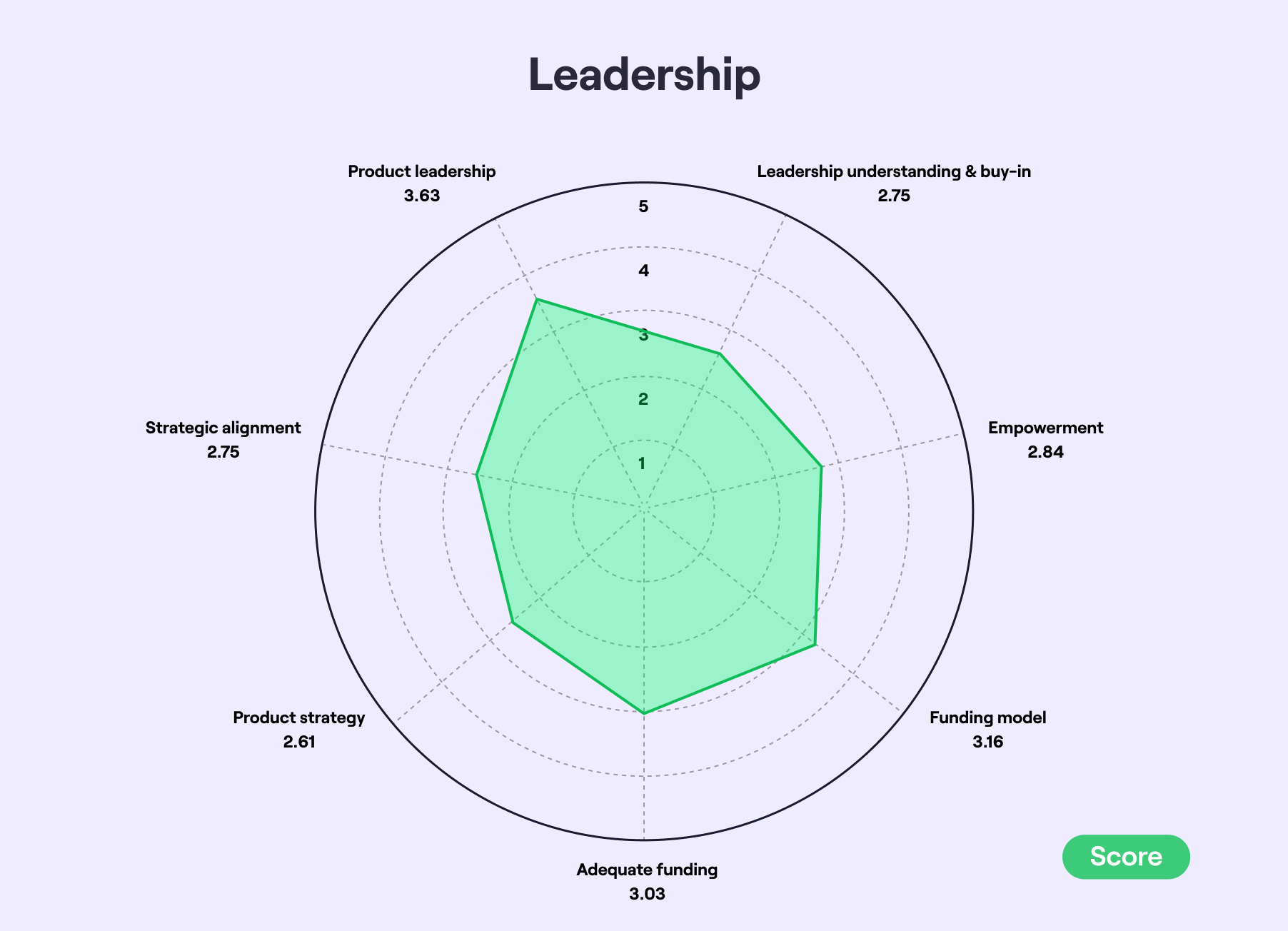
Product Leadership is the area respondents feel most confident about, of everything we asked. They're confident someone owns product at a senior level, and that's a genuinely good sign. Clear ownership creates the conditions for consistent prioritisation. Everything else in a product operating model depends on it.
Product Strategy is the area respondents feel least confident about, of anything in the Leadership section. Respondents expressed high confidence that someone owns product at a senior level, but they're far less sure that a strategy exists, that it's kept current, or that the teams expected to act on it actually understand it.
This is a common pattern we see in practice (as we write in The Missing Guide to Product Strategy). While a lack of product strategy doesn't guarantee failure, teams that are flailing, underperforming, or chasing noise could almost always benefit from one. Getting the right leadership structure in place is essential. Turning that structure into a strategy teams can act on, and keep sharpening over time, takes consistency, time, and effort most organisations underestimate.
Strategic Alignment scored almost as low. Respondents aren't confident their strategy shapes team-level decisions and prioritisation day to day. Having someone in the product seat doesn't guarantee the organisation knows where it's going.
2. Low confidence in domain boundaries and ownership
There's a common narrative that product, design, engineering, and the wider business are constantly misaligned. Responses to the health check suggest a different story amongst those who completed it.
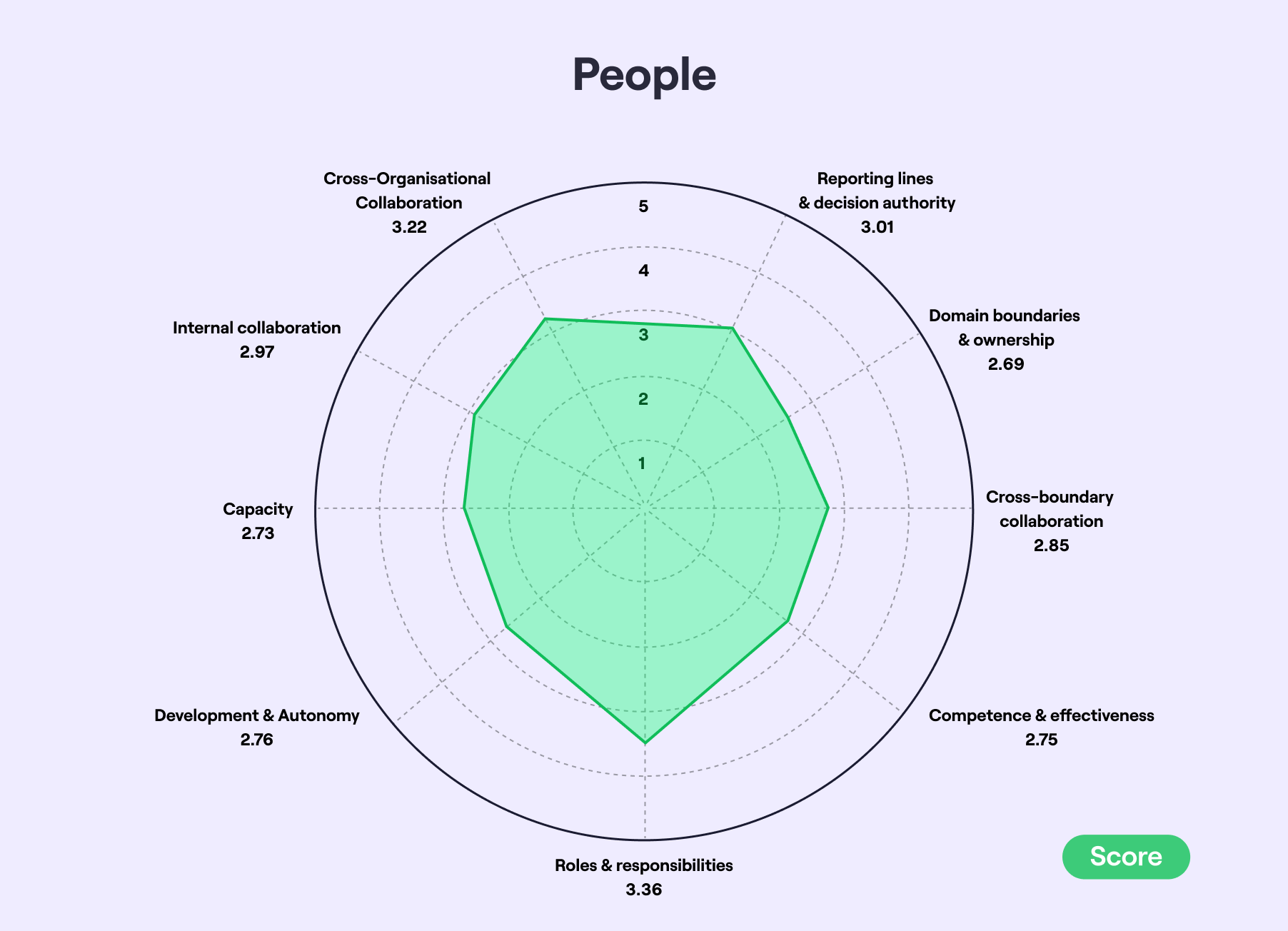
Roles and Responsibilities is one of the areas respondents feel most confident about, and Cross-Organisational Collaboration isn't far behind. Respondents are more confident about how their teams are composed, and about how well they work with sales, marketing, and operations.
Lower confidence in this section is concentrated in Capacity, Domain boundaries and Ownership, Competence and Effectiveness, and Development & Autonomy. Domain Boundaries and Ownership is the weakest of these.
The Domain Boundaries and Ownership question asks whether teams are organised to minimise handoffs and maximise flow. Lower confidence here suggests respondents are less confident that teams are structured in ways that minimise handoffs and support clear ownership of work, which points to organisational constraints rather than interpersonal ones. Respondents appear relatively confident in collaboration itself, but less confident that their teams are structured and resourced in ways that make collaboration effective.
Capacity is among the weakest areas in this section. In our experience, when teams become stretched, discovery activities such as customer conversations and experimentation are often the first to be deprioritised. Which takes us straight to finding three.
3. Respondents express greater confidence in delivery than discovery
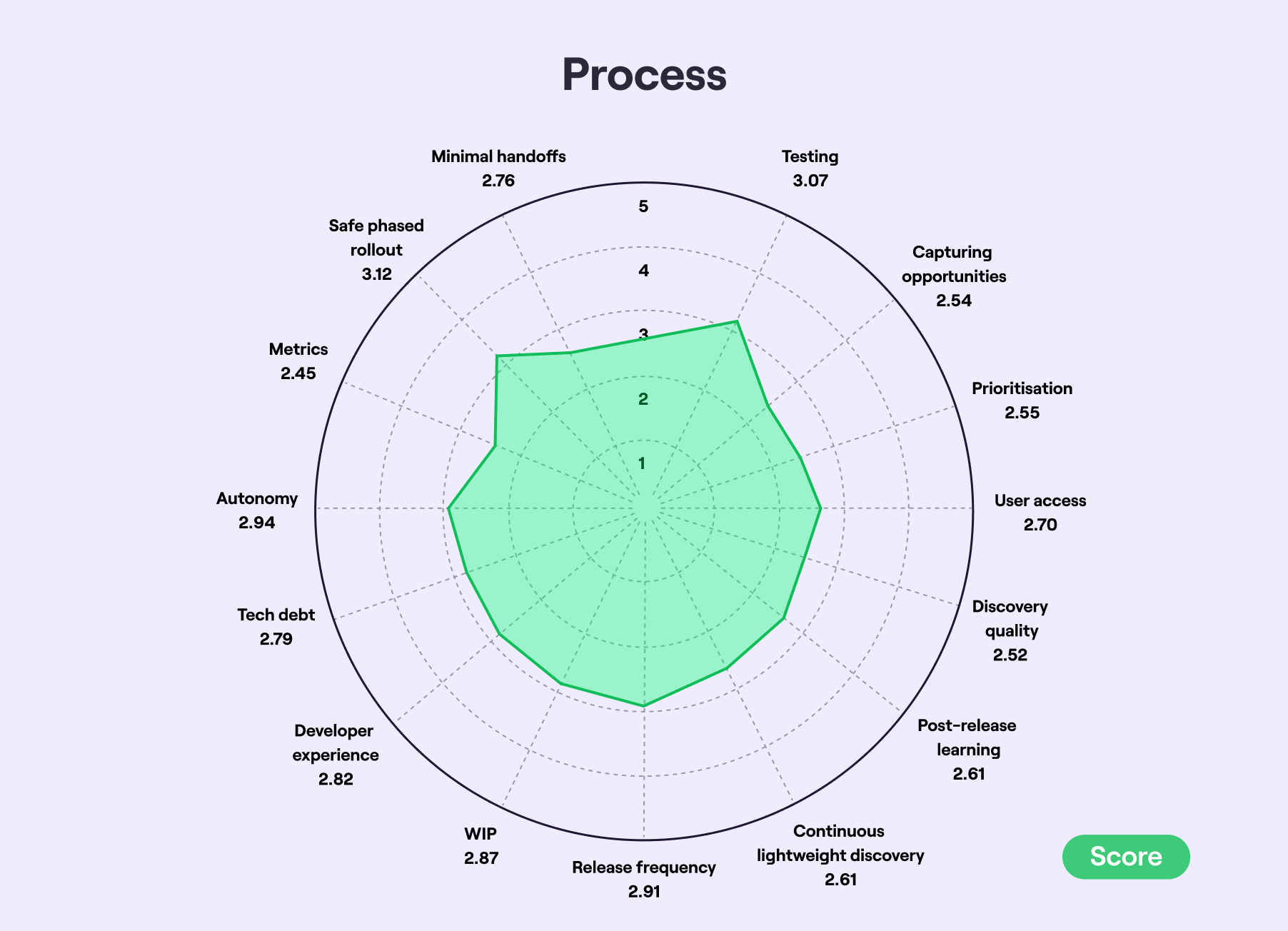
Confidence in delivery is consistently higher than confidence in discovery. Safe Phased Rollout, Testing, and Release Frequency all received higher confidence scores than Discovery related subsections. Teams feel more confident about getting things out the door.
Capturing Opportunities, Prioritisation, Discovery Quality, and Continuous Lightweight Discovery are among the areas respondents feel least sure about. User Access (direct, regular contact with real users) is barely stronger.
Also, Post-Release Learning is just as weak. Respondents expressed little confidence that insights from what they've already shipped actually feed back into what they build next.
We've written before about the most common discovery traps. When teams move fast and capacity runs low, discovery is usually the first thing treated as optional. This survey is consistent with that.
4. Teams are more confident in delivery practices than delivery metrics
Confidence in Metrics is among the lowest in the whole survey, a stark contrast to the confidence respondents showed in their release practices in finding three.
Metrics asks if respondents track and act on signals like DORA and SPACE to actually improve flow and quality. Most reported low confidence.
Without the right metrics, teams fall into the trap of optimising for what's visible, and missing what matters. We wrote about this in Stop measuring the wrong things. We recommend understanding where work stalls, where quality is degrading, and where recovery takes too long. Remember, you can be busy and slow at the same time.
Without that structure it becomes impossible to answer with any confidence if product work created business value. This shows up in our next finding.
5. Connecting product work to business outcomes remains a big challenge
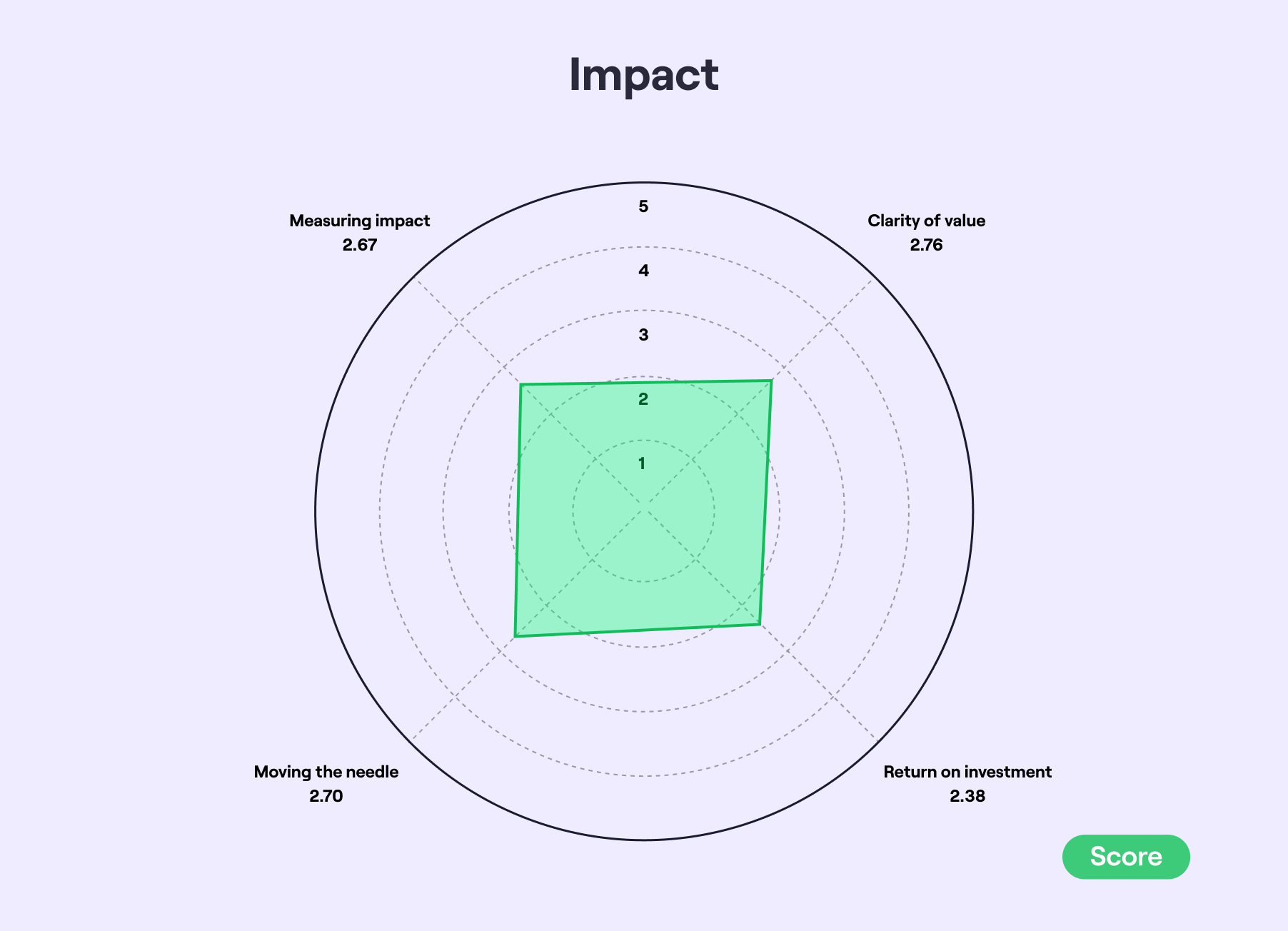
Impact is the weakest section in the entire survey. Clarity of Value, Measuring Impact, and Moving the Needle are all low. Confidence in Return on Investment is the lowest of any single question. This suggests respondents are less confident in explaining what changed because of their product work than in describing what they shipped.
This came up repeatedly at our event: organisations restructure teams, redraw reporting lines, rewrite processes, and never get around to redefining how success is actually measured.
Aligning product metrics with business goals is one of the harder problems in product. The survey suggests respondents have relatively low confidence in this area.
Final comments:
It’s early days, so we’ll continue to collect more responses and build up a bigger picture. So far, the data doesn't suggest that respondents are struggling to deliver software. Most have made real progress on that front, showing high confidence in the visible mechanics of product work such as shipping, structure, and process.
The real deficit in confidence lies in the judgment-heavy activities that surround delivery. Confidence drops sharply when participants are asked about identifying the right problems, learning from real users, measuring whether work actually created value, and connecting daily product decisions to strategic goals.
In other words, respondents report the lowest confidence in the very challenges the product operating model was built to solve: moving from outputs to outcomes, aligning teams around strategy, and tying product work to customer impact.
Want to see where your organisation sits? The product operating model health check takes ten minutes and gives you a personalised breakdown with tailored advice for every area.